Why You Shouldn't Travel Overseas for Dental IMPLANTS (And What to Do Instead)

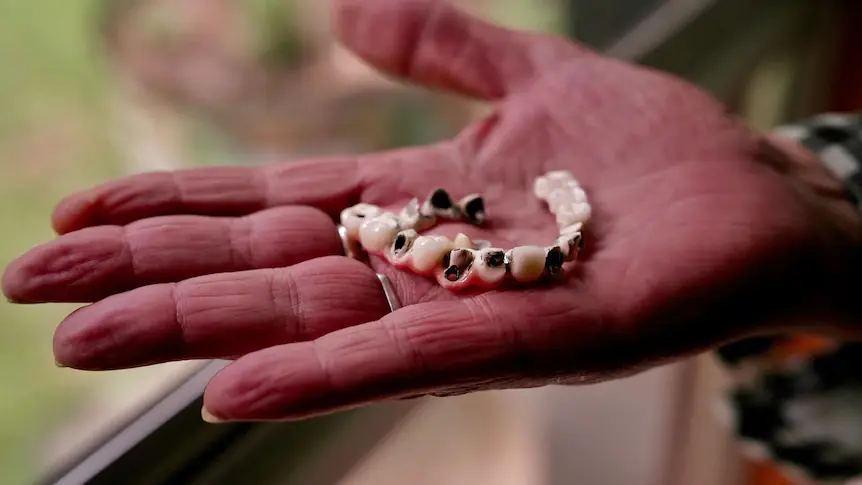
Cheap flights, an all-inclusive package, and a brand-new smile — dental tourism is marketed as a win-win. For patients facing a $20,000+ quote for dental implants, flying to Thailand, Turkey, Bali, or Vietnam for treatment at a fraction of the Australian price can feel like an easy decision.
It isn't. Every year, Australian dentists see a steady stream of patients who return from overseas dental trips with problems that cost more to fix (in money, time, and pain) than they ever saved.
The savings are real. So are the risks
There's no denying the price gap. A single implant that costs $4,500–$6,500 in Australia might be quoted at $1,000–$2,500 in South-East Asia, and full-arch all-on-4 dental implants packages overseas can undercut Australian prices by tens of thousands of dollars. It's easy to see why the offer is tempting, especially for patients without private health cover.
But the low price rarely reflects the full picture. Overseas clinics achieve those costs through compressed treatment timelines, unbranded implant components, and variable sterilisation and infection control standards, all of which affect long-term outcomes, not just the initial procedure.
Why dental implants performed overseas fail more often
Dental implants aren't a same-day treatment. They need 3–6 months of healing (osseointegration) before they can safely be restored with a crown. Many overseas packages compress the entire process — placement, healing, and final restoration — into one or two weeks to suit a single trip. Skipping that healing window is one of the biggest drivers of implant failure.
Research published in the Australian Dental Journal has been widely cited by Australian dental practices warning patients about overseas treatment: roughly 47% of Australians who had implants placed overseas needed corrective work back home within five years, often at an average cost of several thousand dollars per patient on top of what they'd already spent.
Other recurring problems Australian dentists report in returning patients include:
Peri-implantitis — infection and bone loss around the implant
Unbranded or counterfeit components that Australian clinics can't source replacement parts for
Aggressive tooth preparation ("Turkey teeth") that removes healthy enamel unnecessarily to fit veneers or crowns
Bite misalignment and sensitivity from rushed, poorly planned treatment
Antibiotic-resistant infections linked to inconsistent sterilisation standards in some clinics
No follow-up, no recourse
This is the part dental holiday packages don't advertise. Once you're home and a problem shows up — and implant complications often surface months or years later — your treating dentist is a plane ride away. Most Australian dentists are understandably cautious about taking on someone else's implant case blind, without records, X-rays, or knowledge of exactly what was placed.
If the treatment fails outright, Australian consumer protection law and the Dental Board of Australia's complaints process don't reach overseas providers. Travel insurance typically excludes elective procedures. And the Australian Dental Association has repeatedly urged patients to think carefully before travelling for treatment, precisely because there is so little accountability if something goes wrong.
"Don't take my word for it"
We're an Adelaide oral surgery practice, so you might reasonably assume we're biased against dental tourism. Don't take our word for it — read what independent publishers, journalists, and patients themselves have reported:
ABC News: "Dentists see complications after Australians travel overseas for treatments they cannot afford here" — ABC's coverage of Australian dentists treating a growing number of patients with failed overseas dental work, including cases where treatment couldn't be reversed.
ABC News: "Horrifying complications after Australians travel for dental treatment" — TL;DR: ABC's on-the-ground coverage of Australians who paid for cheaper treatment overseas and came home with problems, with local dentists warning about the trend.
CHOICE: "The rise of dental tourism" — TL;DR: Australia's independent consumer group investigates dental holiday packages to Thailand and Malaysia, with former ADA federal president Dr John Matthews warning that complex overseas dental work "fails big time" when it goes wrong, and two real patient case studies weighing up the trade-offs.
CHOICE: "Cosmetic surgery holidays" — TL;DR: a companion CHOICE investigation into overseas cosmetic and dental treatment, noting that when complications arise, the specialist best placed to treat you is suddenly thousands of kilometres away.
The University of Sydney / The Conversation: "Dental tourism: things to consider before going that extra mile for your smile" — TL;DR: a Sydney Dental School academic lays out the accountability and regulation gaps behind dental tourism, backed by references to peer-reviewed case studies and Australian Dental Association guidance.
Barrowman et al., "Dental implant tourism," Australian Dental Journal (2010), via PubMed — ELI5: a peer-reviewed case series from Australian researchers documenting five real cases where overseas implant treatment led to complications, with a lack of accountability and regulation as the common thread.
Dental Protection Australia: "Turkey teeth: managing the fallout of dental tourism" — TL;DR: a real case study from Australia's dental indemnity body describing a patient who returned from Turkey with joined-together crowns, jaw ache, and pulpal disease requiring root canals — and the record-keeping and referral steps his Australian dentist had to take to help him.
Search "Turkey teeth gone wrong" or "dental tourism regret" on Reddit and Facebook groups and you'll find no shortage of firsthand accounts from patients dealing with failed veneers, ongoing sensitivity, and the cost of fixing it all back in Australia. It's worth reading a few before you book anything.
If cost is the real barrier, an implant overseas isn't the only option
A cheap implant overseas isn't a straight swap for an Australian implant at a lower price — it's a different, higher-risk product altogether. But it's also worth stepping back from implants entirely, because they aren't always the right answer to a cost problem in the first place.
A missing tooth has several possible solutions, and the right one depends on your bone health, budget, and what that tooth is doing for you functionally and aesthetically — not just on what's trending on social media:
A well-made denture or partial denture can restore function and appearance at a fraction of the cost of an implant, and modern designs are far more comfortable than the dentures many people picture.
A bridge can replace one or more missing teeth by anchoring to the adjacent teeth, avoiding surgery altogether — a good option in the right circumstances.
Sometimes, doing nothing is the right call. Not every gap needs to be filled. If a missing tooth isn't causing drifting, bite problems, or bone loss, and it's not somewhere that bothers you, leaving the space alone can be entirely reasonable — and it's always a safer starting point than a rushed, poorly placed implant that then needs to be removed.
This is the conversation that gets skipped in a lot of overseas dental packages, where the business model depends on selling the highest-value procedure, not the most appropriate one. It's also the conversation we think matters most.
Our process always starts with an honest discussion of all the options — implants included, but not implants only — so you can weigh up the real costs, benefits, and trade-offs of each before deciding what's right for you. Sometimes that conversation ends in a same-day implant plan. Sometimes it ends in a denture, a bridge, or a decision to leave things as they are. Either way, you leave with a clear, unhurried recommendation rather than a sales pitch.
What we'd suggest instead
If cost is the main barrier, talk to your Australian dentist about it directly. Payment plans, staged treatment, and an honest look at whether an implant is even the best solution for you can make a significant difference — without the risks of an unsupervised recovery 6,000 kilometres from home.
If you're considering dental implants in Adelaide, we're happy to talk through your options, your budget, and a realistic timeline — including what proper healing and follow-up actually looks like.
What we'd suggest instead
If cost is the main barrier, talk to your Australian dentist about it directly. Payment plans, staged treatment, and honest conversations about priorities (what needs doing now vs later) can make a significant difference to the total bill — without the risks of an unsupervised recovery 6,000 kilometres from home.
If you're considering dental implants in Adelaide, we're happy to talk through your options, your budget, and a realistic timeline — including what proper healing and follow-up actually looks like.


Comments